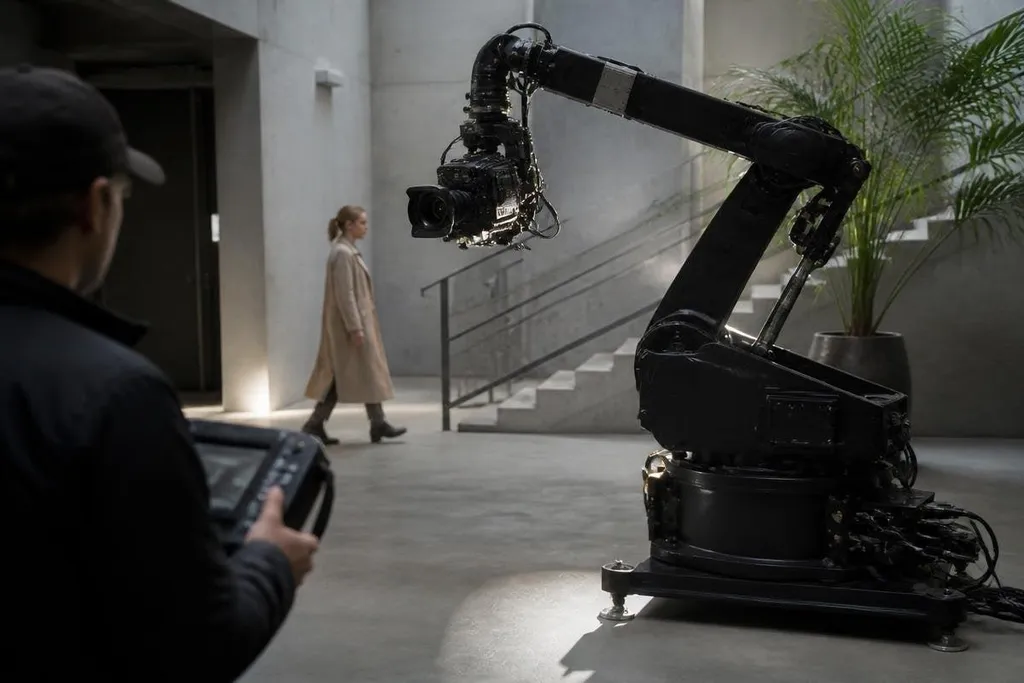
A robotic camera arm can repeat the same move, frame, and focus pull after a reset. That gives cinematographers a way to build shots around exact timing instead of asking a camera operator to repeat the motion by hand. The useful question is where that control helps, and where a robot still needs a person nearby.
- Repeatable moves can match several takes more closely.
- Remote control can keep cameras away from unsafe or hard-to-reach positions.
- The biggest gains come when timing matters as much as framing.
Camera movement becomes a saved path
A camera robot follows a planned path through space. The path can include the camera’s position, tilt, roll, lens movement, and speed, so the same shot can run again after actors or objects return to their marks.
That matters during visual-effects work. A scene may need a clean plate with no actors, a performance take, and extra passes for reflections or effects. If the camera follows the same path each time, editors have fewer changes to make when those images meet.
Its controller keeps speed steady through a move. That steadiness matters because small changes in acceleration can alter motion blur, focus timing, and the space between the camera and the subject.
A person can repeat a pan or push-in well, but those small changes are harder to remove by hand.
Timing can join the camera to the set
A robotic camera can receive timing signals from other equipment. That lets a camera move start with a light change, a mechanical prop, or a programmed action on set.
The benefit depends on the shot. A slow camera move beside a moving vehicle may need exact timing so the vehicle and camera reach their marks together. A repeatable arm can run that move several times while the crew changes the action in front of it.
The same control can help with time-lapse work. The camera can shift by a small amount between frames, creating a controlled change in viewpoint. The crew still has to manage light, focus, weather, and the subject, but the camera motion follows a known path.
Camera automation also raises questions about remote control, safety, and repeatability once crews work away from the rig. Robotics coverage from Robot24.com can place those questions beside the robot, its control system, and the setting where the shot happens.
Remote shots can reduce exposure
Some shots place a camera near heat, water, moving parts, or falling objects. A robot can hold the camera in that position while the operator works from a safer distance.
That does not remove the need for a crew member. Someone must check the mount, cable route, lens, focus, power, and emergency stop before the move starts. Once programmed, the arm follows its path and won't understand that a loose cable has appeared across the floor.
A moving robot also changes the safety problem. Its reach and speed need a clear area, and the camera package adds weight high above the arm’s base. A safe setup needs limits for speed, joint position, and distance from people.
What the robot still cannot decide
A camera robot can repeat a move, but it does not replace the cinematographer’s judgment about the shot. It won't decide that a face needs more space, that a lens feels too flat, or that a performer’s movement has changed the scene.
Those choices come before the path is saved. The crew sets the frame, lens, focus plan, lighting, and move. The robot then handles the physical repeat, which can free the operator to watch the performance and the image instead of counting motor steps.
I'd use a robotic camera when the same motion must work across several takes or effects passes. For a loose handheld scene, the setup time may add more work than it removes.
A practical check before you choose one
The right system depends on the shot, the camera package, and the space around the arm. Check these points before planning the scene:
- Repeat count: Decide how many matching takes the production needs.
- Camera weight: Include the body, lens, media, battery, monitor, and mount.
- Path clearance: Mark the arm’s full reach, including the camera and cables.
- Timing needs: List every light, prop, vehicle, or actor action that must match the move.
- Manual control: Confirm that an operator can stop or take over the arm quickly.
That checklist points to the main use case: repeatable camera motion with a clear reason for repeating it. The technology matters when it gives the crew a shot they can run again without losing the original timing.
The next test for robotic cinematography is whether crews can reset the full scene quickly enough to make that repeatability useful on a working set.